//

Time Out Market, Pink Street, the Tagus ferry — coworking in Lisbon's most reinvented district.
Avenida 24 de Julho 98, 1200-870
Day Pass from €20/day · Meeting Room from €25/hr
Avenida 24 de Julho 1o, 1200-479
Day Pass from €25/day · Desk from €165/mo

Rua de S. Paulo 109
Private office from €300/desk/month
Cais do Sodré is Lisbon's most successful urban reinvention. Twenty years ago it was a working-class port and red-light district; today it's the city's most concentrated cluster of restaurants, natural-wine bars, music venues, and creative offices, anchored by the Time Out Market on the riverfront and the colour-painted Rua Nova do Carvalho — locally just "Pink Street". Coworking here skews creative: agencies, music labels, indie game studios, and the Lisbon offices of European media companies, all clustered between the river and the bottom of Chiado.
The neighbourhood's pivot started with the Mercado da Ribeira itself — a 19th-century covered market designed by engineer Frederico Ressano Garcia (who also drew up the Avenidas Novas plan), built between 1882 and 1892. After a long decline through the 20th century, the city of Lisbon launched a 2010 tender to find an operator to revitalise it. Time Out Lisboa magazine won, and in May 2014 opened the food-hall format that has since been replicated in seven cities globally. Pink Street, painted in 2011 as part of a broader urban-renewal initiative, transformed Rua Nova do Carvalho — a sailor-and-red-light street since the 18th century — into one of the most photographed streets in Lisbon.
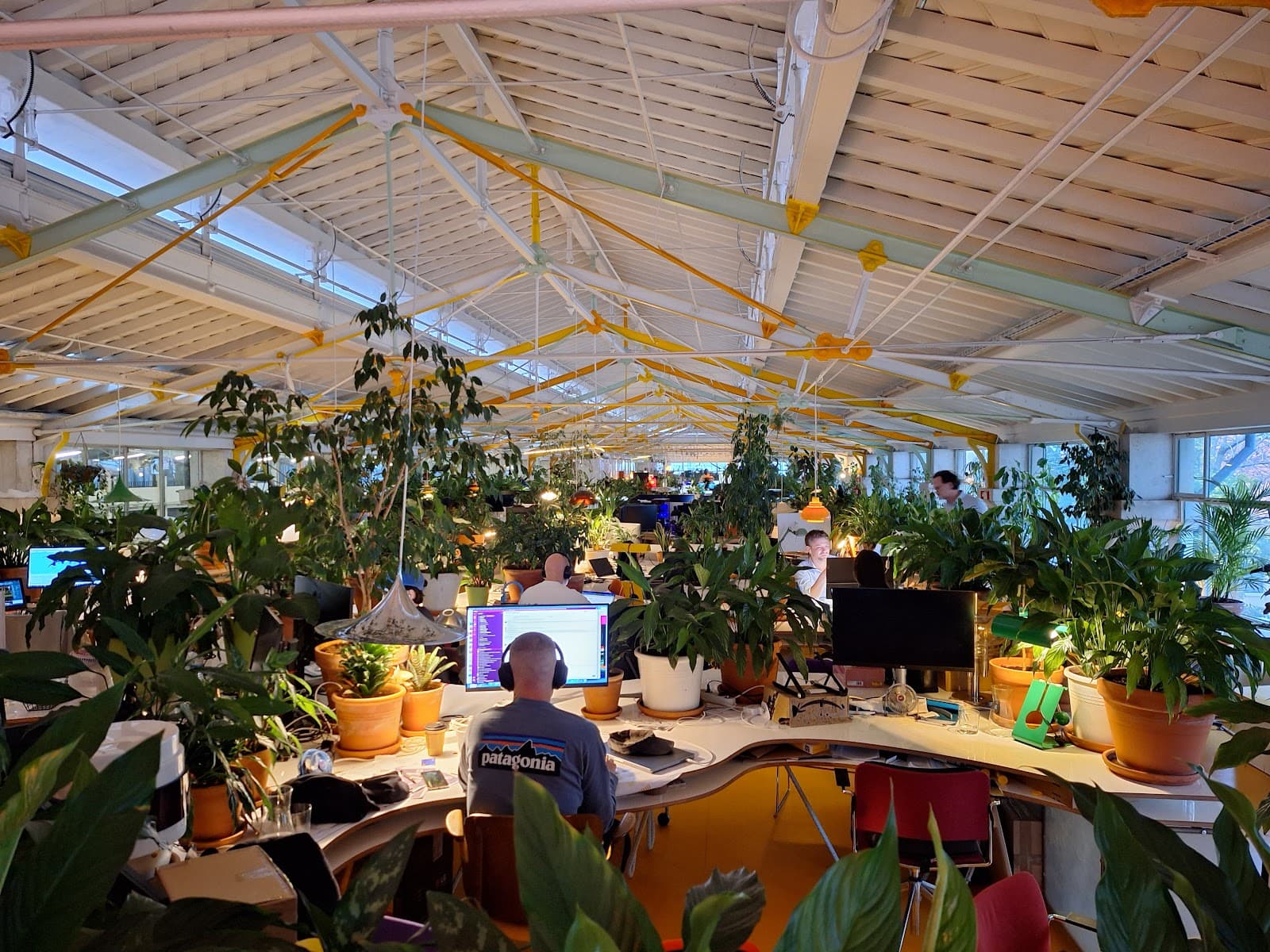
The big anchor here is Second Home Lisboa, opened 2016 in part of the same Mercado building with a famous indoor jungle of 1,000+ plants. LACS Santos sits 8 minutes west on Av. 24 de Julho, and Outsite Lisbon serves the digital-nomad layer one block off Rua de São Paulo. The membership profile is heavy on freelancers, scaleups, and remote teams who explicitly want a non-corporate environment.
Sector mix tilts heavily creative and digital: marketing and communications agencies, music industry, independent game studios, podcast networks, and the Lisbon outposts of European editorial brands (Time Out itself runs from inside the Mercado building). Few banks, few law firms — the kind of professionals who need those services typically commute in from Marquês de Pombal.
What Cais do Sodré offers in spades is post-work everything: Time Out Market for casual client lunches, Pensão Amor for cocktails, the Topo rooftop on Rua dos Cordoeiros, and a bar density that turns Wednesday nights into impromptu networking events. Members frequently end the workday with one drink that becomes three.
Metro: Cais do Sodré (Green Line) connects directly to Baixa-Chiado (1 stop) and onward to Rossio and Marquês de Pombal (4 stops via Baixa-Chiado interchange). Trains every 5–7 minutes during peak.
Train: Cais do Sodré is the Lisbon terminus of the Cascais line — direct trains to Belém (8 minutes), Estoril (25 minutes), and Cascais (35 minutes), departing roughly every 20 minutes.
Ferry: The Cais do Sodré ferry terminal runs commuter boats to Cacilhas (around 10 minutes), Seixal, and Montijo on the south bank — useful for members living across the river.
Walking: Time Out Market is 2 minutes from the Metro; Praça do Comércio 8 minutes east; the southern end of Avenida da Liberdade 10 minutes north; Príncipe Real 12 minutes north on a moderate climb.
Airport: Lisbon Portela is 25 minutes by Metro (Green → Red change at Alameda) or 20 minutes by taxi.
Time Out Market — the food hall in the 1892 Mercado da Ribeira, with 35+ stalls curated by Time Out Lisboa. Open daily; busiest from 7pm. The traditional morning produce market still operates on the ground floor on the other side of the building.
Pink Street (Rua Nova do Carvalho) — the pedestrianised street painted entirely pink in 2011, lined with bars and music venues. Probably the most photographed street in central Lisbon.
Praça D. Luís I — the small triangular square between Cais do Sodré station and the river, an obvious meeting point.
Topo Chiado — rooftop bar above Rua dos Cordoeiros with one of the best Tagus views in the city.
Pensão Amor — the former brothel turned bar, restaurant, and burlesque venue on Rua do Alecrim — a classic example of the area's transformation.
Cais das Colunas — the marble steps into the Tagus at Praça do Comércio, 8 minutes east. The kind of after-work view that justifies the entire neighbourhood.
The bars on Pink Street get loud after 10pm Thursday–Saturday, but most coworking spaces are one block back from the noise corridor and double-glazed. The actual workday (9am–7pm) is calm; only late-night or early-morning users would notice the bar buzz.
Cais do Sodré is more food-and-drink-focused, more international, more digital. Baixa-Chiado is more historic, more cultural, with longer-established creative agencies. Both connect by Metro Green Line in 1 stop. Many members work at one and eat at the other.
Yes — Cais do Sodré station is the Lisbon terminus of the Cascais line. Direct trains to Belém (8 min), Estoril (25 min), and Cascais (35 min) depart roughly every 20 minutes. Many members live in Cascais and commute in.
Yes, the strongest in Lisbon along with Príncipe Real and Lx Factory. Outsite Lisbon explicitly serves this segment, and the broader district's coffee shops and coworking-friendly bars (Heim Café, Dear Breakfast, Hello, Kristof) are full of remote workers most weekdays.
Rua Nova do Carvalho was painted pink in 2011 as part of an urban-renewal initiative to rebrand the area, which had been a sailor-and-red-light district since the 18th century. The colour stuck and is now one of Lisbon's most photographed streets.
May 2014. The Mercado da Ribeira building dates back to 1882 (designed by engineer Frederico Ressano Garcia), but Time Out Lisboa magazine took over part of it after winning a city tender in 2010 to revitalise the space. The food-hall format has since been replicated in seven other cities globally.
Browse 3 workspaces, check prices, and book a day pass or office — no commitment needed.


