//
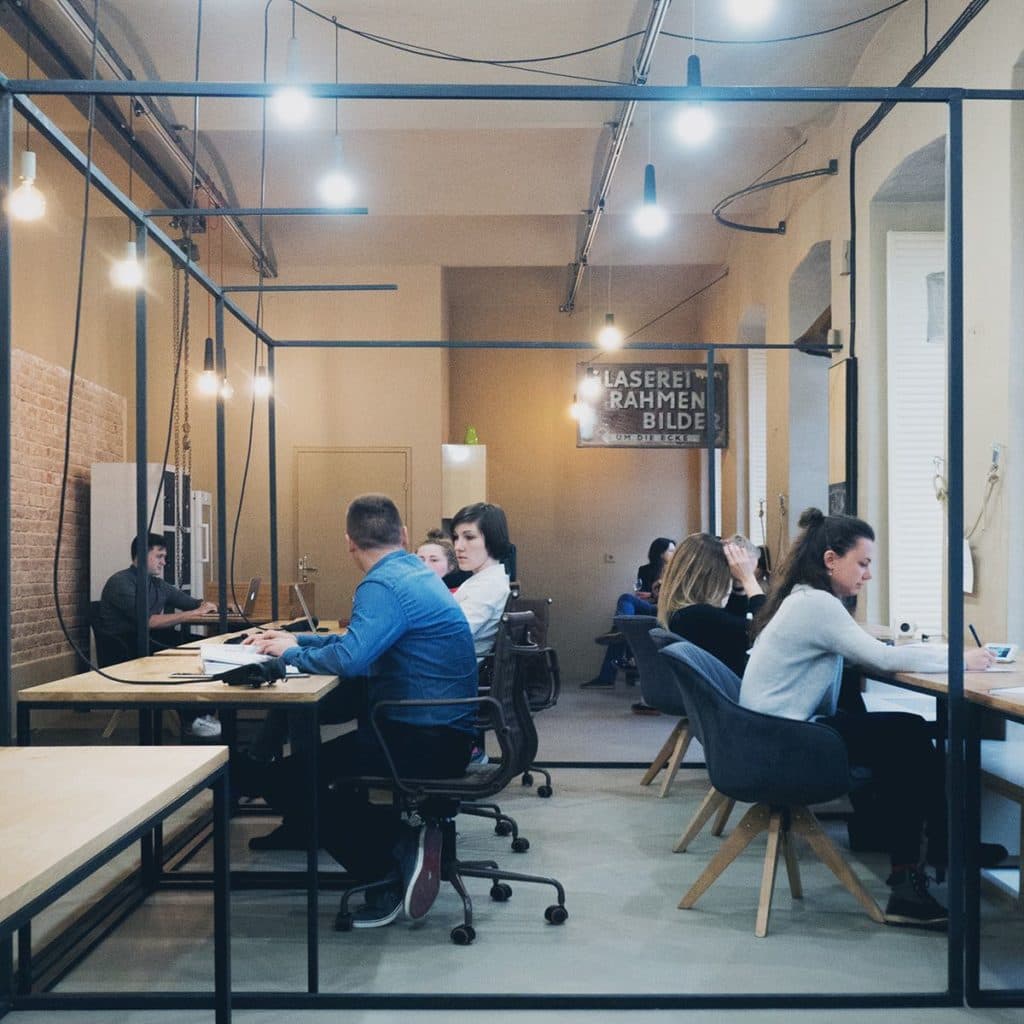
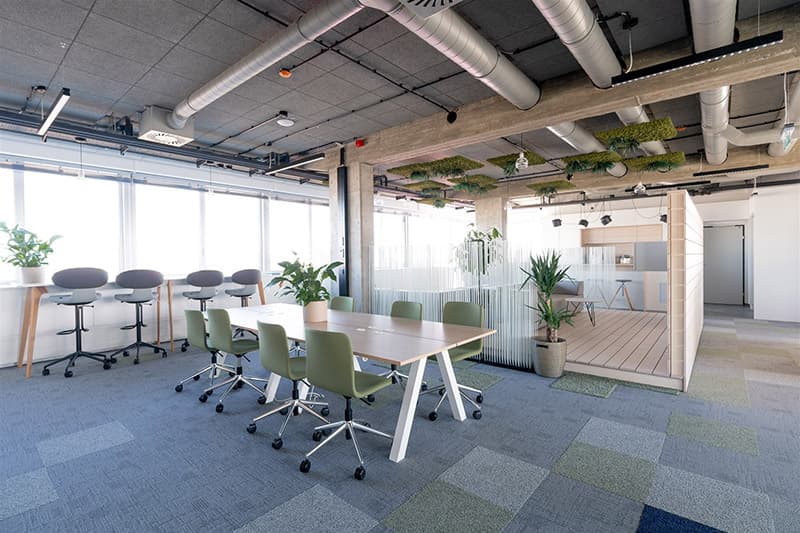
Old AKH Campus, Berggasse 19, Palais Liechtenstein — workspaces in Vienna's academic 9. Bezirk.
The 9. Bezirk — Alsergrund — was formed in 1850 by merging the suburbs of Althan, Himmelpfortgrund, Lichtental, Michelbeuern, Roßau, Thury and the northern part of Alservorstadt. It is the academic and medical heart of Vienna: the University of Vienna's humanities campus occupies the former General Hospital (the Old AKH, originally built 1693, expanded under Emperor Joseph II in 1784, university campus since 1995–1998), and the modern AKH (1964–1994) is one of Europe's largest hospitals. Sigmund Freud lived and worked at Berggasse 19 from 1891 to 1938, where the Freud Museum now stands. The Palais Liechtenstein on Fürstengasse is one of Vienna's most important Baroque palaces, with the Liechtenstein art collection among the largest privately held in Europe.
Alsergrund's character is shaped by three institutions: the University of Vienna (humanities and medicine), the AKH and its medical research clusters, and the Sigmund Freud legacy. Together they create an unusually high concentration of researchers, doctoral students, postdocs and early-career professionals — the kind of demographic that shows up in coworking spaces with a different mix than the legal-finance Innere Stadt or the design-led Neubau.
Coworking density is moderate. The district hosts mostly independent operators serving freelancers, postdocs working on side projects, medtech and biotech founders, and the Vienna outposts of European NGOs. Members value the proximity to the Old AKH lecture halls and libraries, the academic café network around Spitalgasse, and the canal-side bike connection to Leopoldstadt and the Innere Stadt.
The 9. Bezirk's economy mixes academic services, medical and pharma SMEs, public-sector consulting (the Roßauer Barracks and the Defence Ministry are at the southern edge), and a long tail of NGOs, think tanks and cultural institutions. Lunch is light and academic — Mensa-style options at the Old AKH plus small bistros along Währinger Straße and Spitalgasse. After-work happens at the Freud-Museum-adjacent cafés, the Berggasse area, and along the Donaukanal at Friedensbrücke.
U-Bahn: Schottentor (U2) at the south-eastern corner, Schottenring (U2 + U4) on the canal edge, Roßauer Lände (U4), Friedensbrücke (U4), Spittelau (U4 + U6), Alser Straße (U6) and Michelbeuern-AKH (U6). The U6 runs the western boundary; the U4 runs the eastern boundary along the canal.
Train: Wien Franz-Josefs-Bahnhof on the eastern edge — ÖBB regional services to the Wachau and the Waldviertel.
Tram + bus: Trams 5, 33, 37, 38, 41, 42, 43 and 44 cross the district. The Donaukanal cycle path runs along the eastern boundary.
Walking: The Innere Stadt is 5 minutes south across the Ringstraße at Schottentor; Leopoldstadt 5 minutes east across the canal; Josefstadt 5 minutes south-west.
Airport: Vienna International (VIE) is around 28 minutes via U4 to Wien Mitte and CAT.
Old AKH / University of Vienna Humanities Campus — the former General Hospital (1693, expanded 1784 by Emperor Joseph II), converted 1995–1998 to host the University of Vienna's humanities institutes. The cobblestone courtyards are one of Vienna's most atmospheric academic environments and a popular outdoor lunch spot.
Sigmund Freud Museum (Berggasse 19) — the apartment where Freud lived and worked from 1891 to 1938 before fleeing to London. Opened as a museum in 1971; comprehensively reopened in 2020 after a major renovation.
Palais Liechtenstein — the Baroque palace on Fürstengasse housing the Liechtenstein art collection, one of the largest privately owned art collections in the world.
Votivkirche — the Neo-Gothic church on the Ringstraße at Schottentor, built 1879 to commemorate the 1853 assassination attempt on Emperor Franz Joseph I.
Modern AKH (Allgemeines Krankenhaus) — one of the largest hospitals in Europe, built 1964–1994. Hundreds of medical-research SMEs cluster around its perimeter.
Strudlhofstiege — the Art-Nouveau outdoor staircase (1910) made famous by Heimito von Doderer's novel, connecting Pasteurgasse to Liechtensteinstraße.
The University of Vienna's humanities campus occupies the Old AKH — the former General Hospital built 1693 and expanded under Emperor Joseph II in 1784, converted to a university campus from 1995 to 1998. The modern AKH built 1964–1994 sits in the western part of the district. Together with the Sigmund Freud legacy at Berggasse 19, this gives Alsergrund the highest concentration of researchers, students and academic professionals in Vienna.
Berggasse 19 — the apartment where Freud lived and worked from 1891 to 1938 before fleeing to London. Opened as a museum in 1971 and comprehensively reopened in 2020 after a major renovation. Walking distance from most Alsergrund coworking spaces.
Alsergrund is academic and quieter; the Innere Stadt is corporate and ceremonial. Alsergrund has the Old AKH humanities campus, Berggasse 19 and the Palais Liechtenstein; the Innere Stadt has the Hofburg and the legal-finance cluster. The two are 5 minutes apart at Schottentor on the U2.
The Art-Nouveau outdoor staircase from 1910 connecting Pasteurgasse to Liechtensteinstraße — made famous by Heimito von Doderer's 1951 novel of the same name. Today it's one of the most-photographed staircases in Vienna and a useful Alsergrund landmark for orientation.
Browse 2 workspaces, check prices, and book a day pass or office — no commitment needed.