
//
The MQ on the south, Spittelberg in the middle, Schottenfeld in the north — coworking in Vienna's most creative 7. Bezirk.
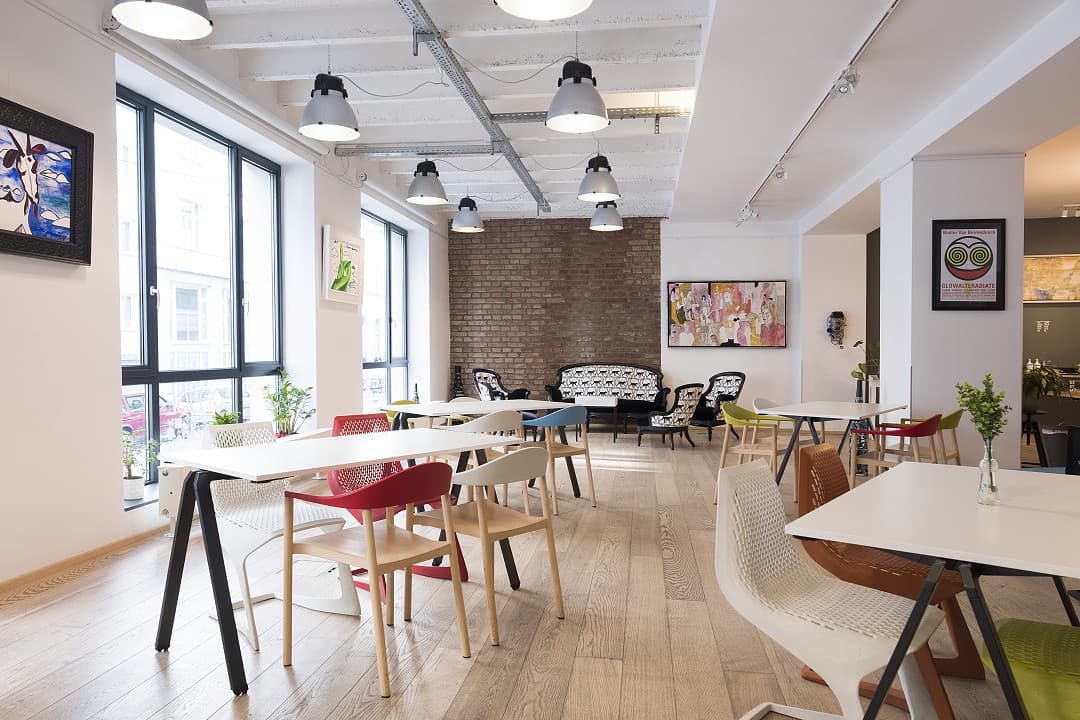
85 Schottenfeldgasse, 1070
Day Pass from €24/day · Meeting Room from €60/hr
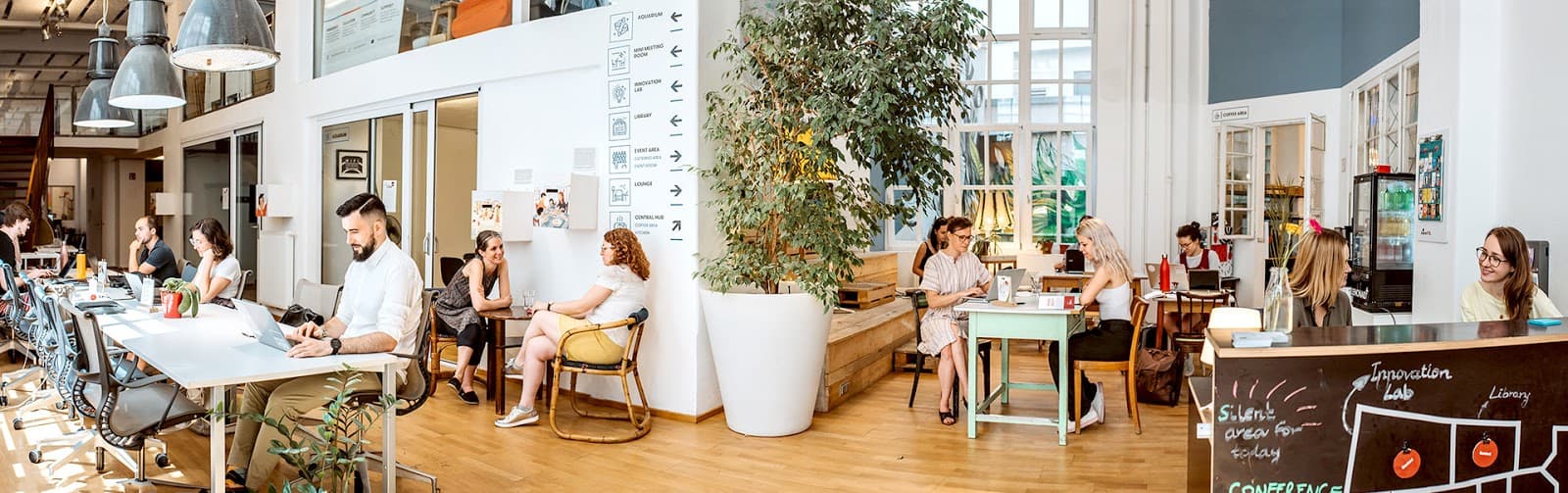
56 Lindengasse, 1070
Day Pass from €20/day · Meeting Room from €17/hr
The 7. Bezirk — Neubau — was created in 1850 by consolidating the suburbs of Neubau, Neustift, Spittelberg and Schottenfeld, plus parts of Laimgrube, Mariahilf, St. Ulrich and Altlerchenfeld. Its southern boundary runs along Mariahilfer Straße — the same shopping artery that defines the 6. Bezirk on the other side. The MuseumsQuartier sits on Neubau's southern edge, the preserved Biedermeier alley network of Spittelberg in the middle, and the textile-industry heritage of Schottenfeld (the historic "Brillantengrund") in the north. Today Neubau is Vienna's most creative-industry district — design studios, advertising agencies, fashion labels, independent galleries and the Vienna outposts of European magazines fill the courtyards.
Neubau's economic identity was set in the late 18th century when textile factories were erected in Schottenfeld, bringing rapid economic expansion and dense construction. The 19th-century courtyard tenements that resulted are largely intact today and provide the unusually high-ceilinged loft-style spaces that the creative industries gravitate towards. Spittelberg, in the middle of the district, was nearly demolished in the 1960s and saved by a citizen-led preservation movement — the Biedermeier alley network is now one of Vienna's best-preserved pre-1860 quarters and a magnet for boutique shops, design studios and Christmas-market visitors.
For coworking, Neubau is the natural Mariahilf alternative — same Mariahilfer Straße access, but with a more creative-industry tenant mix and dense courtyard architecture. Members are typically design and advertising agencies, fashion and lifestyle brands, indie publishers and small consulting firms.
The 7. Bezirk has the highest concentration of creative-industry SMEs of any Vienna district — design and branding agencies, fashion labels with showrooms, independent magazine and book publishers, gallerists, photographers and small architectural practices. Lunch options are exceptional: from the historic Spittelberg Beisl to the newer natural-wine bars on Lindengasse and Burggasse. After-work life concentrates in Spittelberg, around the Volkstheater on the southern edge, and at the MQ courtyards.
U-Bahn: Volkstheater (U2 + U3 interchange) at the south-eastern corner, Neubaugasse (U3) midway along Mariahilfer Straße, Burggasse-Stadthalle (U6) at the western edge.
Tram + bus: The Ringstraße trams meet the district at the south-eastern Volkstheater corner; lines 5 and 33 cross from the north; bus 13A runs north–south through Burggasse.
Walking: The Innere Stadt is 5 minutes east across the Ring; Mariahilf is one street south across Mariahilfer Straße; Josefstadt is 5 minutes north on Strozzigasse.
Airport: Vienna International (VIE) is around 22 minutes via U3 / U4 to Wien Mitte and CAT.
MuseumsQuartier — the 60 000 m² cultural complex (formally on the southern district line, accessible from Neubau via Burggasse and Museumsplatz) housing Leopold Museum, MUMOK, Kunsthalle Wien and the Architekturzentrum.
Spittelberg — the Biedermeier alley quarter saved from demolition in the 1960s, one of Vienna's best-preserved pre-1860 neighbourhoods. Hosts the city's most authentic Christmas market each December.
Schottenfeld / Brillantengrund — the historic textile-industry quarter at the western end of the district, today the densest cluster of fashion and design studios in Vienna.
Volkstheater — the 1889 theatre on the Ringstraße at the southern edge, one of the largest German-language theatres.
Ulrichsplatz — the small medieval-origin square with the St. Ulrich church, the historic centre of the St. Ulrich suburb.
Both share the Mariahilfer Straße — Mariahilf to the south, Neubau to the north. Neubau is more creative-industry leaning (design, advertising, fashion, indie publishing) and has Spittelberg / Schottenfeld; Mariahilf is more retail and consumer-facing. Crossing the street between them takes 30 seconds.
The Biedermeier alley quarter in the centre of Neubau, saved from 1960s demolition by a citizen-led preservation movement. Today it's one of Vienna's best-preserved pre-1860 neighbourhoods, with low cobblestone alleys, boutique shops, traditional <em>Beisl</em> and Vienna's most atmospheric Christmas market each December.
The Schottenfeld textile-industry heritage from the 1780s onwards left a stock of high-ceilinged courtyard buildings ideal for studios, ateliers and small showrooms. That stock combined with the MuseumsQuartier on the southern edge attracted design and advertising agencies, fashion labels and indie publishers from the 1990s onwards. Today Neubau has the highest creative-SME density of any Vienna district.
Volkstheater (U2 + U3) at the south-eastern corner, Neubaugasse (U3) midway along Mariahilfer Straße, and Burggasse-Stadthalle (U6) at the western edge. The U3 along Mariahilfer Straße is the main commuting axis.
Browse 2 workspaces, check prices, and book a day pass or office — no commitment needed.